Best mini fridges: picks for different budgets and needs
Seven mini fridges compared by capacity, door style and freezer option, with plain guidance on who each one suits and who should skip it.
On this page
- How we sorted them
- Glass door beverage fridges
- How to choose among the seven
- Placement and care
- Common mistakes
- What to expect over time
- Fridges with a freezer
- Who should skip which
- What matters beyond capacity
- Efficiency is published, so use it
- Size and capacity
- Keep food safe
- Installation and airflow
- Which type suits which use
- What to verify before you buy
- Budget the whole cost
- Final decision rules
Seven mini fridges look like seven versions of the same box. They are not. Five are beverage-focused glass-door refrigerators with retailer capacity claims in the 120- to 130-can range. Two come with a freezer compartment. One is the same EUHOMY design in silver. Our job here is to tell you which of those differences should change your decision.
These are publisher editorial comparisons, not a systematic owner-feedback study. We did not test the fridges.
How we sorted them
First by whether they have a freezer, because that changes how you use the fridge. Then by door style and finish, and finally by capacity as the listing states it.
Glass door beverage fridges
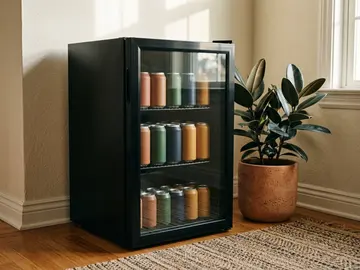
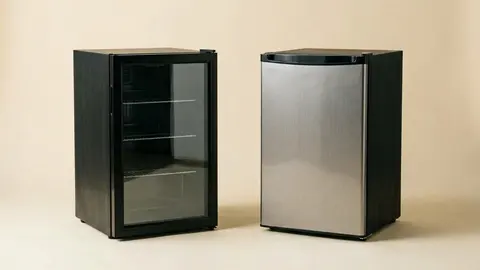
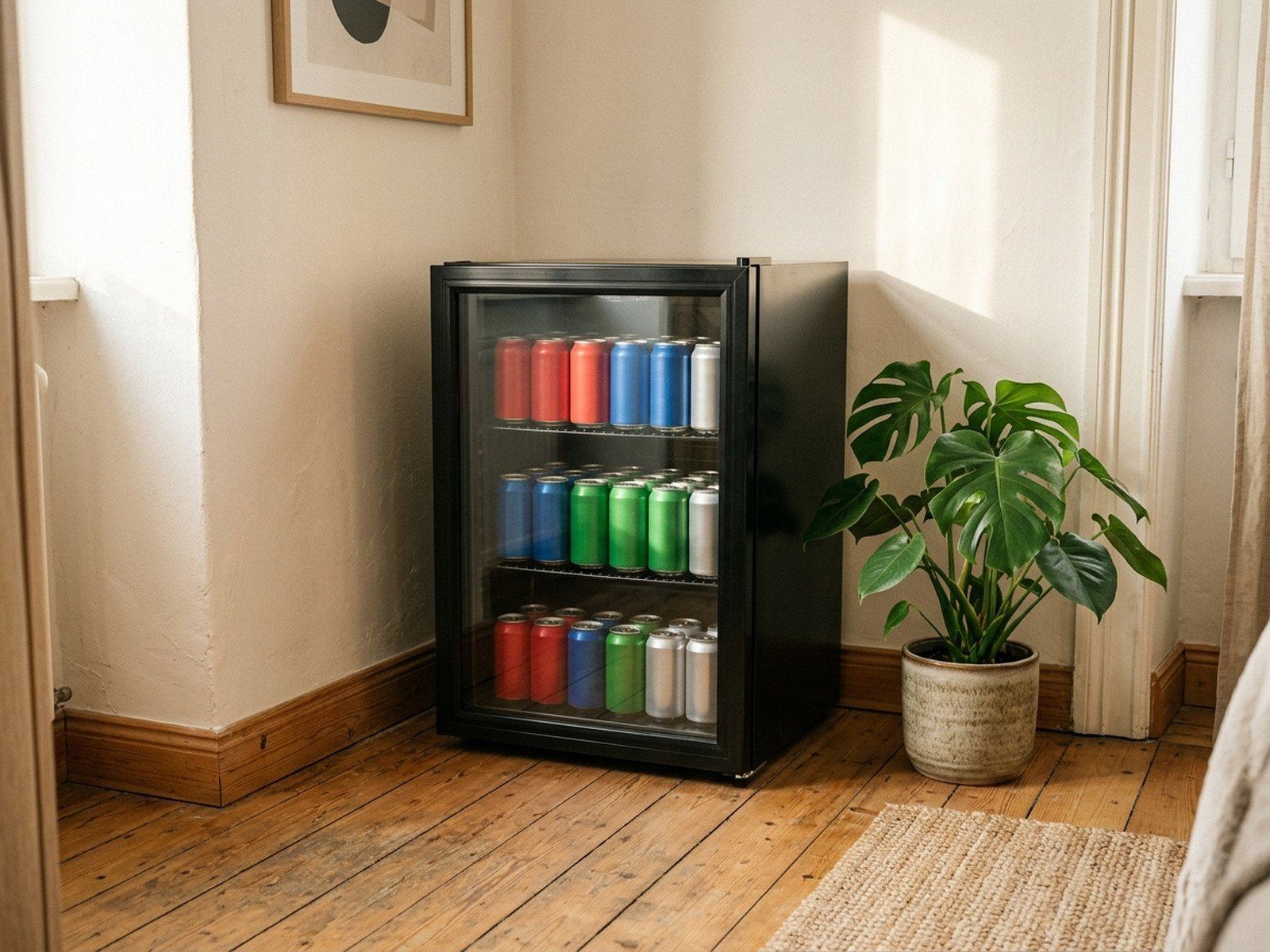
The EUHOMY 130-can fridge in black and the EUHOMY 130-can fridge in silver share a design with a glass door and a 130-can listing. The Icyglee 126-can fridge lists 3.2 cubic feet and a drink cooler description. The Feelfunn 126-can fridge quotes a 34°F to 64°F range, and the hOmeLabs 120-can cooler lists 3.2 cubic feet and 120 cans.
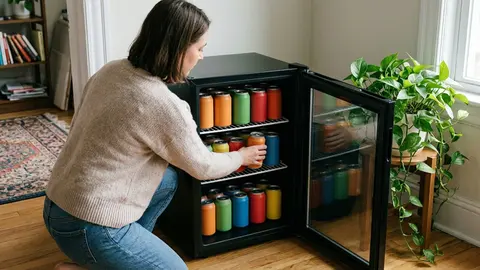
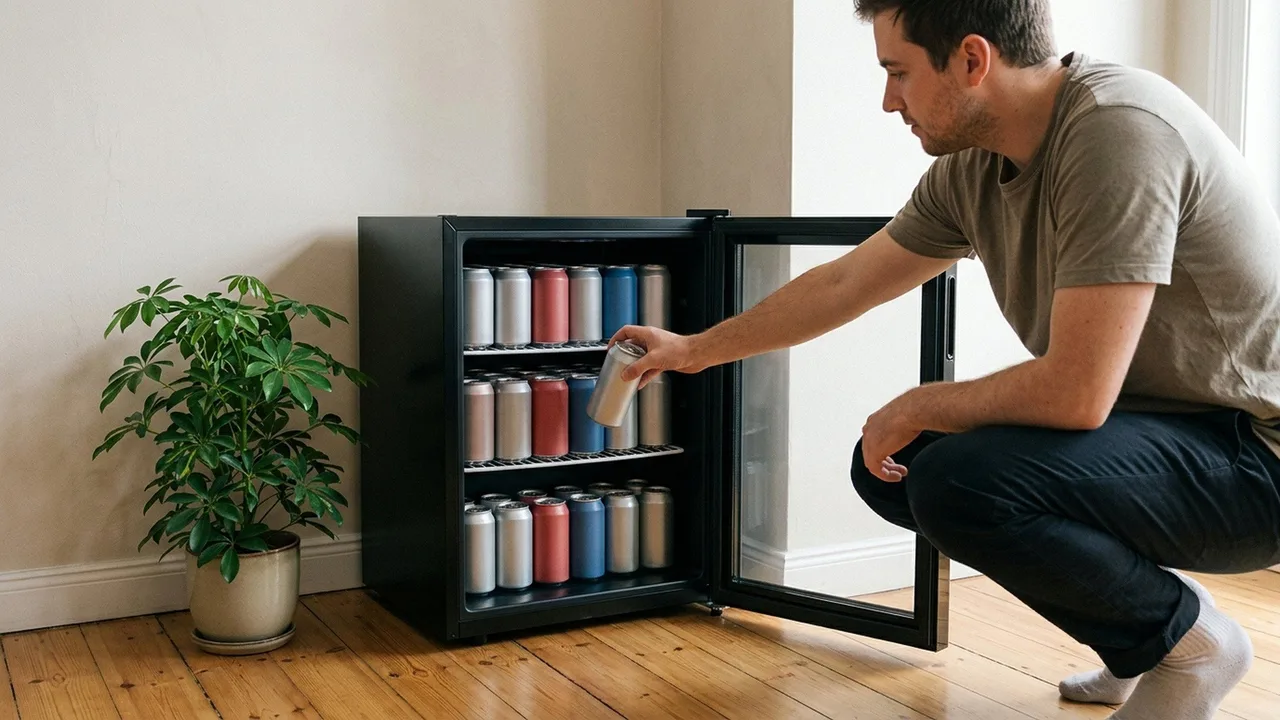
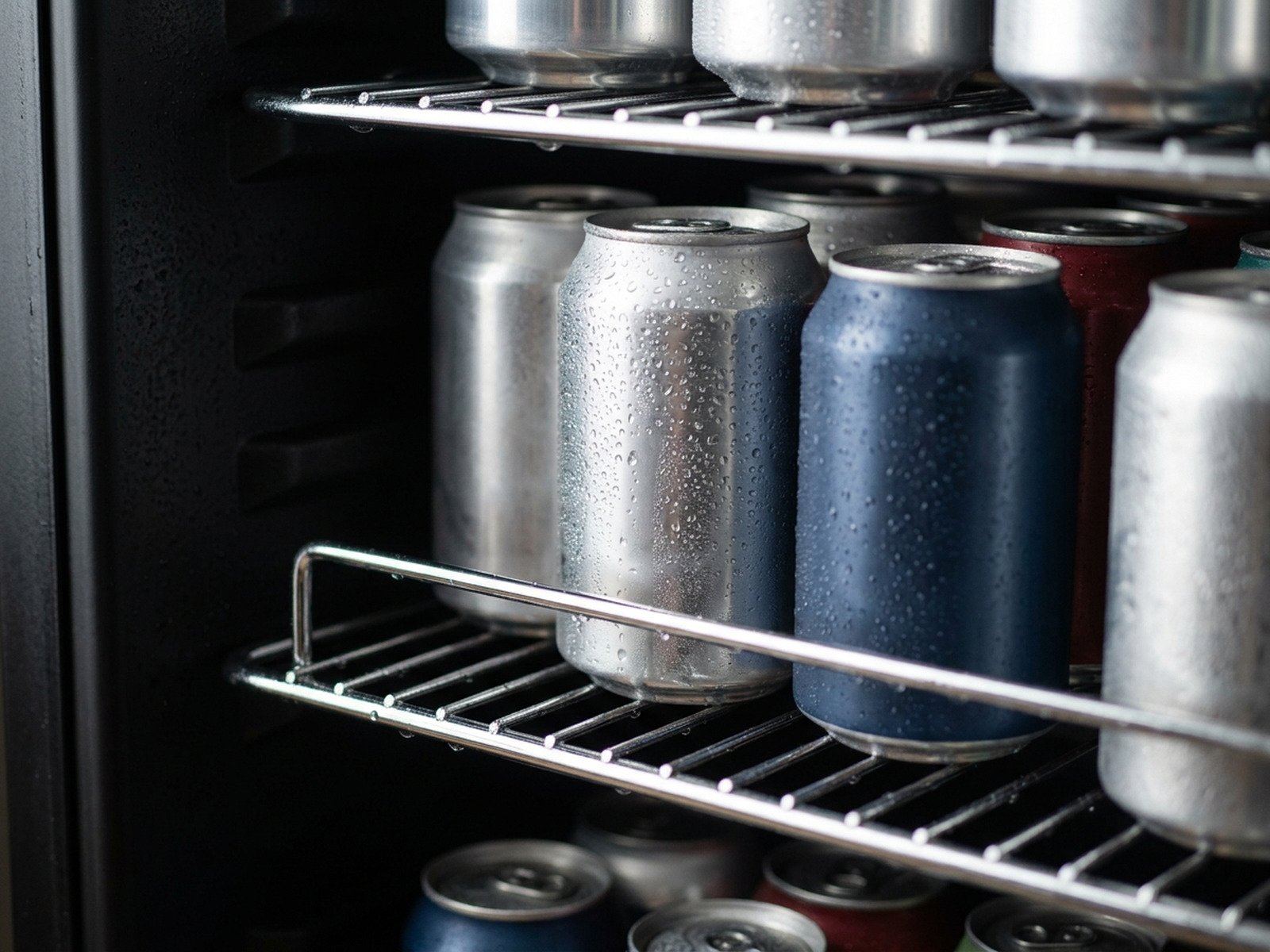
They are good at what they do: show drinks, hold them cold and look neat on a shelf. They are not designed for frozen food, and glass doors lose cold faster than solid doors when opened frequently.
How to choose among the seven
Start by deciding whether you need a freezer. If you do not, pick among the glass door beverage fridges based on size and finish. The EUHOMY models come in black and silver, so you can match your space. If you need a freezer, compare the Igloo and the two door EUHOMY, remembering that the freezer compartment reduces cooling space.
Placement and care
Keep a few inches of space around the unit. Do not place it next to a heat source. Clean the glass with a soft cloth and mild cleaner. Check the seals now and then, and wipe the gasket to keep it flexible.
Common mistakes
Buying too big a fridge for a small room, ignoring the noise of compressors, stocking warm drinks and blocking vents. A few minutes of planning avoids most of these.
What to expect over time
Mini fridges are simple appliances, but they are not built to last forever. Cold performance can drift as seals age, and compressors can get noisy. Treat a mini fridge as a convenient appliance, and give it basic care to extend its life.
EUHOMY 130-can beverage refrigerator (Black)
A 130-can glass door beverage fridge in black.
EUHOMY 130-can beverage refrigerator (Silver)
The same 130-can design in silver.
Icyglee 126-can Mini Fridge
A 126-can, 3.2 cu ft beverage fridge.
Feelfunn 126-can Beverage Fridge
A 126-can fridge quoted at 34°F to 64°F.
hOmeLabs 120-can Beverage Fridge
A 120-can beverage cooler with a 3.2 cu ft listing.
Fridges with a freezer
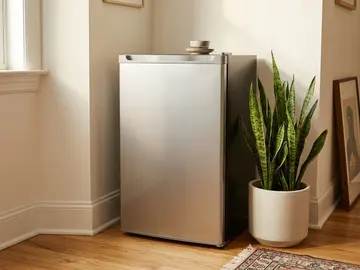
The Igloo 3.2 cu ft mini fridge is a single door model with a freezer compartment and glass shelves. The EUHOMY two door mini fridge also lists 3.2 cubic feet with a separate freezer door. If you need to keep a frozen item or make ice, these make sense. The freezer takes space from the main compartment, and tiny freezers fill up and frost over quickly.
Igloo 3.2 cu ft Mini Fridge
A single door fridge with a freezer compartment and glass shelves.
EUHOMY 3.2 Cu.Ft Mini Fridge
A two door fridge with a separate freezer.
Who should skip which
Skip the glass door models if the fridge will sit in direct sun or a hot garage. Skip the freezer models if you want maximum drink capacity.
What matters beyond capacity
Door swing: check whether the door is reversible if your space is tight. Shelves: adjustable shelves help with tall bottles. Noise: place the fridge level and away from walls. Energy: smaller, fuller fridges use less than half empty ones.
Efficiency is published, so use it
Energy figures for compact refrigerators are available from the ENERGY STAR product finder. As one example of how to read them, an ENERGY STAR certified compact refrigerator of 1.0 cubic feet is listed at 241 kilowatt hours per year. That is a single unit, not a typical figure, but it shows the kind of number to look for: an annual kWh estimate on the yellow label or in the product data. A fridge with no stated figure is harder to judge, and that absence is itself information.
Size and capacity
Capacity is quoted in cubic feet and it is the first number to settle. Igloo lists its 3.2 cu ft model at 32.5 x 17.13 x 18.625 inches with a one year warranty. A retailer's spec table for that model is ambiguous about the capacity and reversible-door rows, so confirm both with the manual before relying on them. Cubic feet also say little about usable space: a thick freezer compartment or a curved back wall can take a surprising share of a small box.
Keep food safe
Mini fridges are often bought for drinks and then used for leftovers, which changes the requirement. Food safety guidance from the FDA is to keep a refrigerator at 40°F or below and a freezer at 0°F, and to use an appliance thermometer to check. Small compact fridges can struggle to hold temperature in a warm room, so place a thermometer inside for the first week and adjust the dial until it settles. If you plan to store anything perishable, check the freezer compartment too, because many small units do not hold a true freezer temperature.
Installation and airflow
A mini fridge needs clearance at the back and sides so the compressor can shed heat. Pushing it into a tight cabinet recess raises its energy use and shortens its life, unless the manual says it is built for that. Let it stand upright for the time the manual specifies before plugging in, and keep it off carpet where the vents can clog.
Which type suits which use
For drinks only, a simple single-door unit is enough. For a dorm or office with food, look for a separate freezer door and adjustable shelves. For a bedroom, check noise reports in the manual and listing, since a compressor that cycles at night is more noticeable in a small space than in a kitchen.
What to verify before you buy
Check the stated dimensions against the space, the door swing against nearby furniture, the annual energy figure, the warranty term and the return policy. That short list catches most disappointment, and it costs nothing.
Budget the whole cost
The purchase price is only part of the cost. Add the electricity from the annual kWh figure, a thermometer, and any cabinet or shelf you need to hold it. If a model has no stated energy figure, assume the running cost is unknown and weigh that against the price.
Final decision rules
Drinks only, display matters: a glass door beverage fridge. Frozen snacks needed: Igloo or the two door EUHOMY. Bedroom: favor quiet, and read feedback on noise before buying.
For a how to guide, read How to choose a mini fridge, and for a head to head between two choices, read EUHOMY 130-can beverage refrigerator vs Igloo 3.2 cu ft mini fridge. For running costs, see How much electricity does a mini fridge use?.
Skip these if
You want a true second kitchen fridge. A mini fridge is a convenience, not a replacement for a full size fridge.
Questions people ask
Can a beverage fridge store perishable food?
Only if the exact manufacturer documentation approves that use and an appliance thermometer confirms a food-safe temperature. Beverage-cooler labeling alone is not enough.
Are mini fridges quiet?
This guide has not measured sound. Look for a model-specific decibel figure and avoid a sleep-sensitive location when no comparable measurement is available.
How long do mini fridges last?
No verified lifespan figure is established here. Service access, warranty, ventilation, seal care and operating conditions are more useful checks than an unsupported number.
Does a fuller fridge use less energy?
This guide does not make that claim. Use model-specific energy information and keep required airflow inside the cabinet rather than overpacking it.
Sources and scope
Reference material is linked for the scope described below. This is not a claim that every statement or current retailer offer has been independently verified.
- Igloo 3.2 cu ft refrigerator IRF32PL6A (Home Depot listing): retailer listing
- Refrigerator and freezer temperatures (U.S. FDA): food-safety guidance
- ENERGY STAR certified residential refrigerators (product finder): energy data for one listed unit
No hands-on testing or systematic reliability study was performed. Confirm current instructions, seller, model and box contents before ordering.