Induction cooktop pots and pans: what works and what does not
Induction cooktops only heat magnetic cookware. Learn which pots work, how to test yours, and what to buy if they do not.
On this page
- Why induction needs magnetic pans
- The magnet test
- What usually works
- What usually does not
- Size and flatness
- Models, brands and what changes
- What to buy if your pans do not work
- Cooking tips on induction
- The magnet test and what it means
- What a burner manual adds
- Why a pan can fail even when it is magnetic
- Protecting the glass
- Buying new cookware
- Mistakes people make
You bring home a shiny induction cooktop, place your favorite pan on it and nothing happens. The cooktop beeps, the display flashes and you wonder if it is broken. It is almost certainly the pan. Induction is picky about cookware, and knowing why makes shopping simple.
Why induction needs magnetic pans
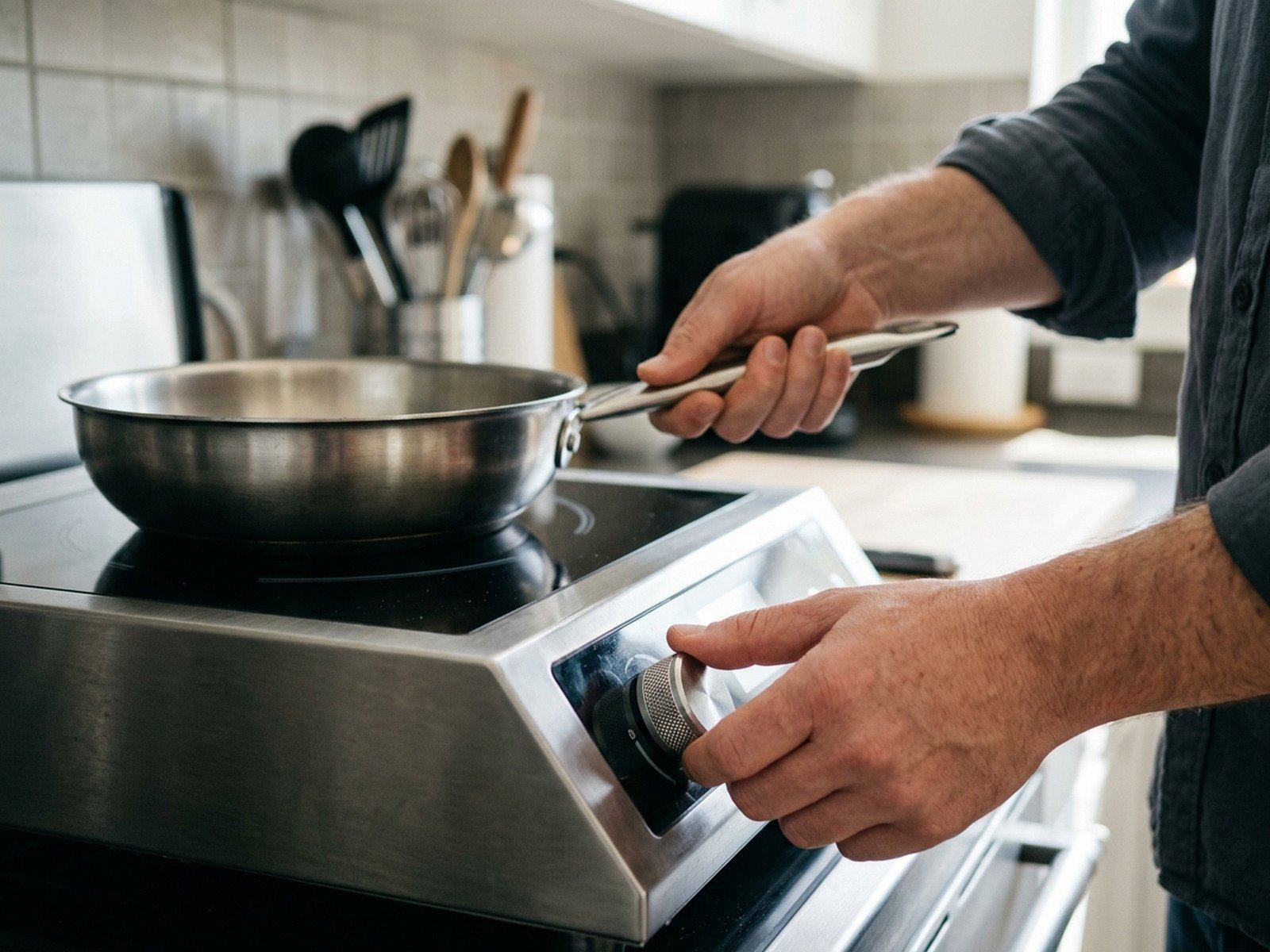
An induction cooktop contains a coil that creates a changing magnetic field. When a magnetic pan sits on top, the field makes the metal itself heat up. The surface of the cooktop stays cooler than the pan, which is why induction feels fast and controllable. A pan that is not magnetic gives the field nothing to work on.
The magnet test
A magnet sticking firmly is a useful first screen, not a guarantee. The pan must also meet the cooktop’s base-diameter, flatness and material requirements. If the manual excludes a material or shape, the magnet result does not override that instruction.
Take a small fridge magnet and hold it against the bottom of your pan. If it clings firmly, the pan is suitable. If it barely sticks or falls off, the pan will be a poor fit. Some pans have a magnetic layer only in the center, which can lead to uneven heating.
What usually works
Cast iron and enameled cast iron are excellent, because iron is magnetic. Many stainless steel pans work, especially those made with a magnetic steel base. Carbon steel works well too. Look for the induction symbol, which looks like a coil.
What usually does not
Pure aluminum, copper, glass and most ceramic cookware do not work. Some manufacturers add a magnetic base to make them induction ready, so check the packaging.
Size and flatness
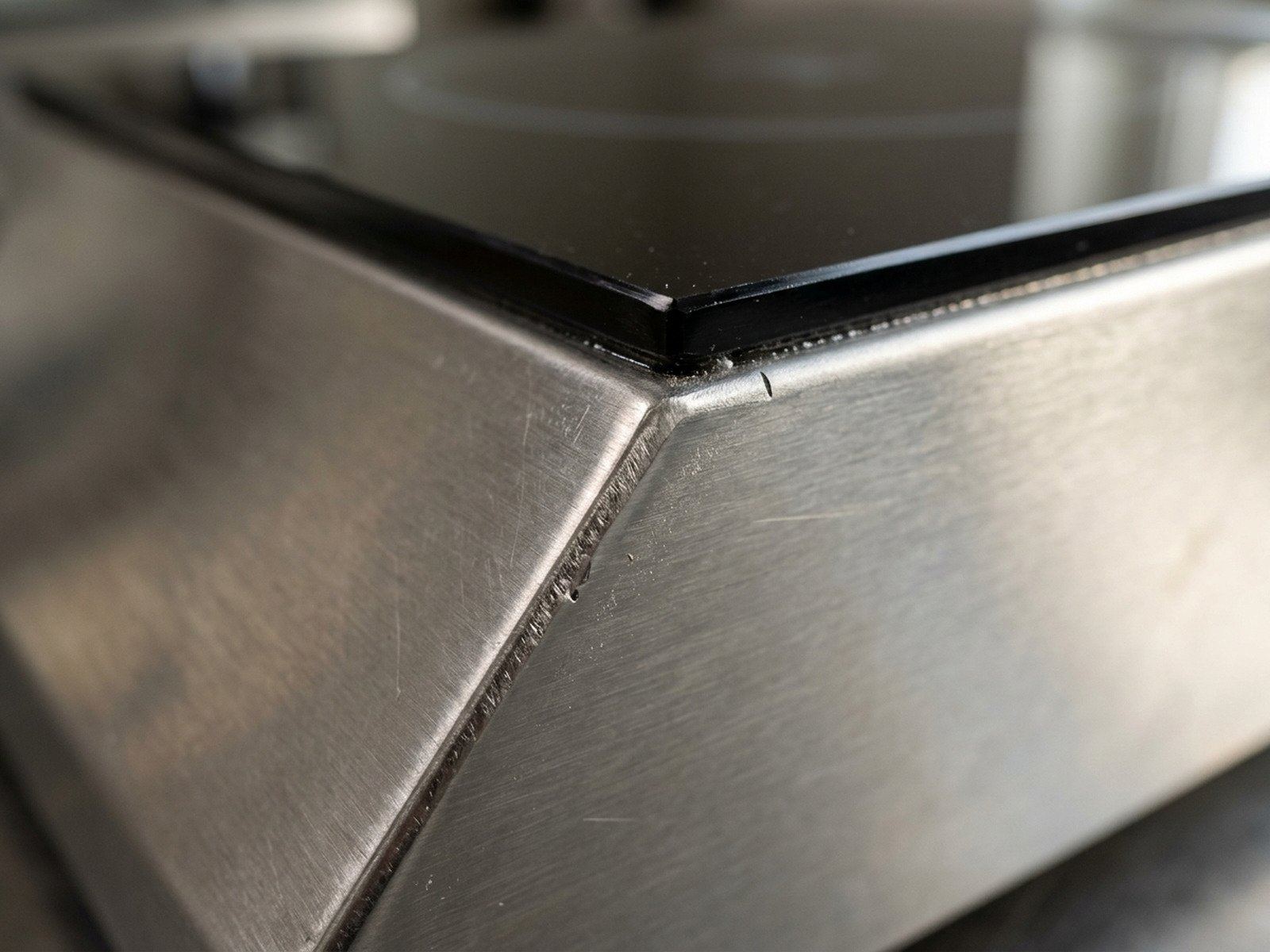
For the ChangBERT commercial-grade cooker and Nuwave Gold Precision, verify the exact documented heating-zone and permitted pan-base sizes. Do not infer even heating from a retailer coil graphic. Flat bottoms make better contact, so warped pans heat unevenly and may rattle.
Models, brands and what changes
The Duxtop 9600LS and the Nuwave Pro Chef work the same way in principle. Both use induction principles, but permitted pan diameter, flatness and material can differ by model, so cookware compatibility still needs a model-specific check. A cooktop with pan detection will refuse to heat if the cookware does not suit it, which is a safety feature rather than a fault.
What to buy if your pans do not work
You do not need a full set. One good stainless steel or cast iron skillet and a saucepan cover most cooking. Look for pans that state they are induction compatible. Add more over time.
Cooking tips on induction
Start with lower heat than you would use on gas, because induction responds quickly. Use a pan that fits the coil. Do not preheat an empty pan for a long time. Keep the cooktop surface clean and dry.
The magnet test and what it means
Consumer Reports describes the standard check: if a magnet sticks to the bottom of a pan, it will usually work on induction. Cast iron and many stainless steel pans pass. Aluminium and many nonstick pans do not unless they have a magnetic layer, and some clad copper or nonstick pans do work. Always test your own pans rather than trusting a label.
What a burner manual adds
The manual for the Duxtop 9600LS, BT-200DZ and 9610LS family lists cast iron, magnetic steel, enameled iron and stainless steel with a magnetic base as suitable. It lists glass, ceramic, copper, aluminium and non-magnetic stainless steel (18/10 and 18/8) as unsuitable. It requires a base of at least 5 inches and a flat base that touches the surface or rises no more than 1-inch above it. Pans with warped bottoms lose contact and may give poor heating or trigger an error code.
Why a pan can fail even when it is magnetic
Size matters. A pan that is too small may not be detected, and one that is too large may heat unevenly at the edges. A warped base rocks on the glass. A very thin magnetic layer may heat but cool quickly. If you see a no-pan error (E0 in the Duxtop manual), reposition the pan or try another.
Protecting the glass
Lift pans rather than sliding them, as grit scratches glass. Do not heat an empty pan, and keep metal tools off the surface. Let the cooktop cool before cleaning and use only the cleaning methods the manual allows.
Buying new cookware
If most of your pans fail, buy one or two induction-ready pans first, such as a skillet and a saucepan, and check the base diameter before ordering.
Mistakes people make
Buying a cooktop without testing pans, using warped pans, placing a pan off center, and using the wrong size. All are easy to avoid.
To choose a unit, read How to choose a portable induction cooktop, and for a shortlist, see Best portable induction cooktops: picks for different budgets and needs.
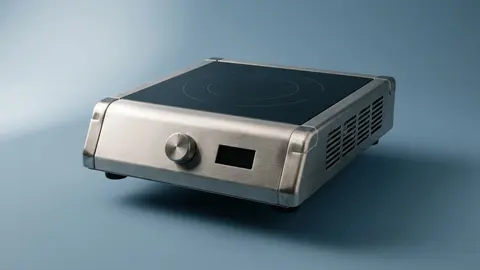
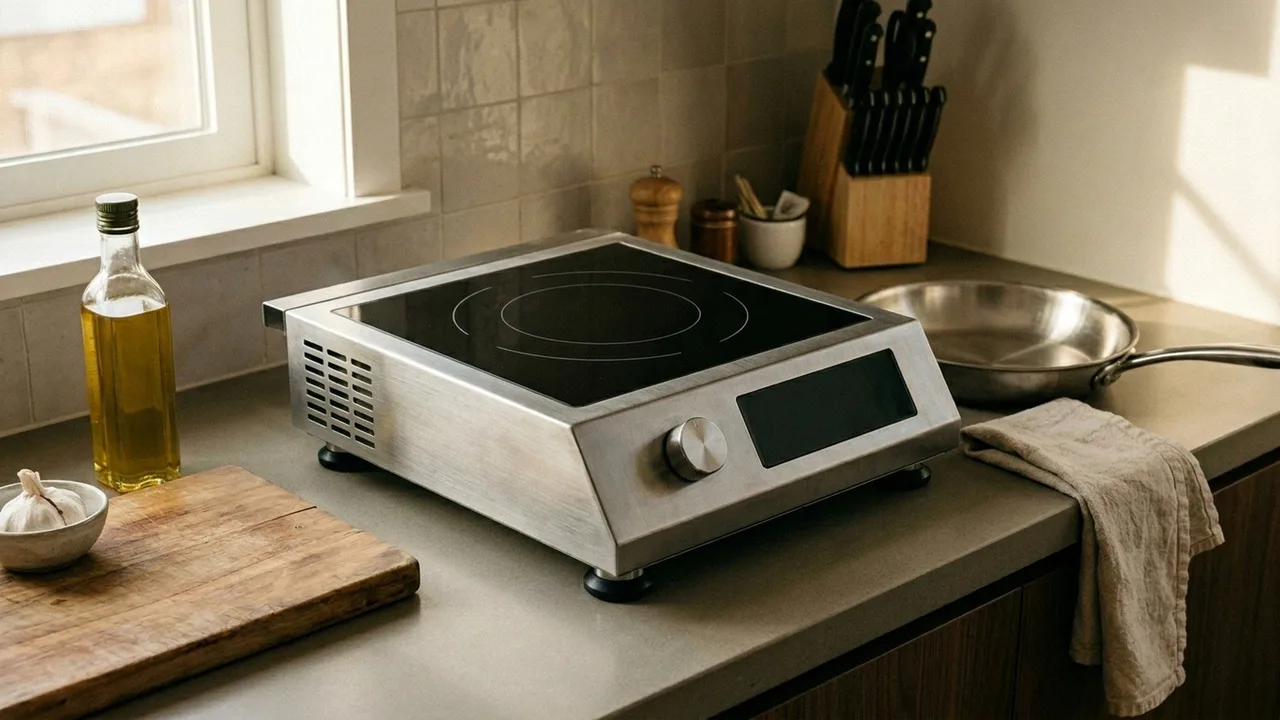
ChangBERT Induction Cooktop
A commercial grade cooker with a large heating coil.
Duxtop 9600LS
A Duxtop countertop burner; verify the exact model rating and regional requirements.
Nuwave Gold Precision Induction Cooktop
A Nuwave burner; verify its heating-zone dimensions and controls.
Nuwave Pro Chef Induction Cooktop
A commercial grade portable burner from a long running brand.
Skip induction if
You rely on pans that are aluminum, copper or glass and cannot replace them.
Questions people ask
How do I test a pan for induction?
Hold a magnet to the base. If it sticks firmly, the pan will work. If it sticks weakly or not at all, it may heat poorly or not at all.
Does stainless steel work on induction?
Many do, but not all. The metal needs a magnetic layer. Look for an induction symbol or test with a magnet.
Can I use glass or ceramic cookware?
Not on its own. They do not respond to the magnetic field, though some have a magnetic disk in the base.
Do I need to throw out my old pans?
Only if they fail the magnet test. Many households already own a few suitable pans.
Sources and scope
Reference material is linked for the scope described below. This is not a claim that every statement or current retailer offer has been independently verified.
- Induction cookware guidance (Consumer Reports): cookware compatibility
- Duxtop 9600LS / BT-200DZ / 9610LS induction cooktop manual: manufacturer manual hosted by a third party
No hands-on testing or systematic reliability study was performed. Confirm current instructions, seller, model and box contents before ordering.