Best stand mixers: picks for different budgets and needs
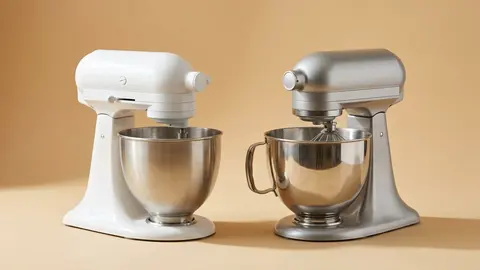
Four stand mixers compared by size, power and who should buy each, from the KitchenAid Classic to a commercial style 8.4-quart model.
On this page
- The short answer by buyer
- KitchenAid Classic, 4.5 quart
- Care and long-term use
- KitchenAid Artisan, 5 quart
- Cuisinart 5.5 quart
- Commercial style 8.4 quart
- Who should skip each
- Comparison at a glance
- The published numbers
- Watts are a poor guide
- Capacity in practice
- Tilt-head or bowl-lift
- Attachments and the hub
- Care
- Two practical tests before you commit
- Before you buy
Four mixers is a short list, which makes this easier. They cover three different buyers: the casual home baker, the keen baker who wants more bowl, and the person who bakes in volume. These are publisher editorial comparisons, not a systematic owner-feedback study.
The short answer by buyer
Casual baker: the KitchenAid Classic. Keen baker: the Artisan or the Cuisinart. Heavy or large batch baker: the commercial style 8.4-quart.
KitchenAid Classic, 4.5 quart
The KitchenAid Classic Series K45SS is a 4.5-quart tilt head mixer in an onyx black finish. It is the entry point to a brand with a long history, and the size handles cookies, cakes and a loaf of bread dough. The tradeoffs are the smaller bowl and a motor aimed at lighter work, so heavy dough in large amounts is not its strength.
Care and long-term use
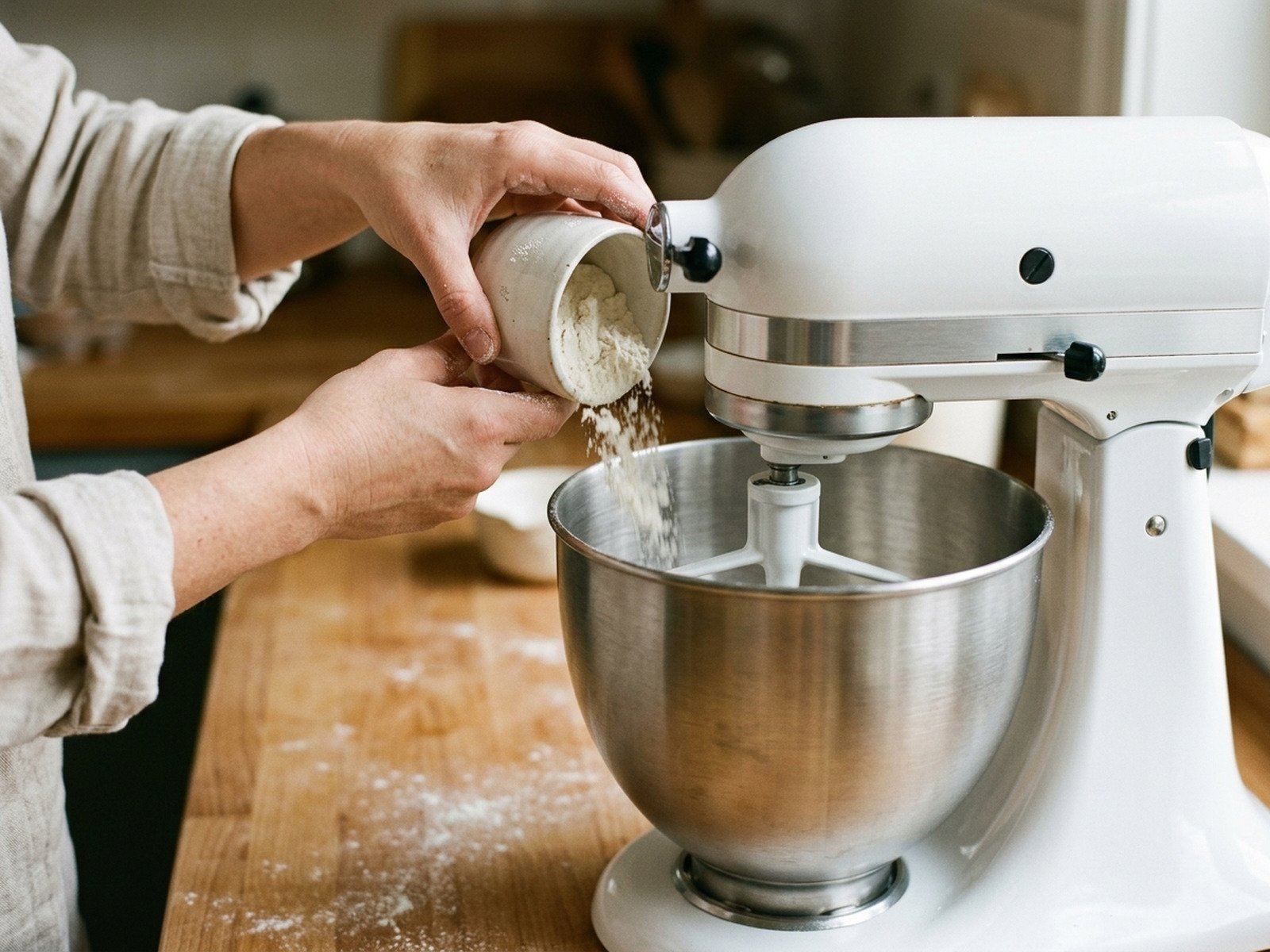
Clean the bowl and beaters after use, and wipe the head and column. Keep the mixer on a stable surface and avoid overloading it with stiff dough beyond what the manual suggests. Use lower speeds to start. If the mixer begins to leak grease or sound rough, stop and check the manufacturer's guidance.
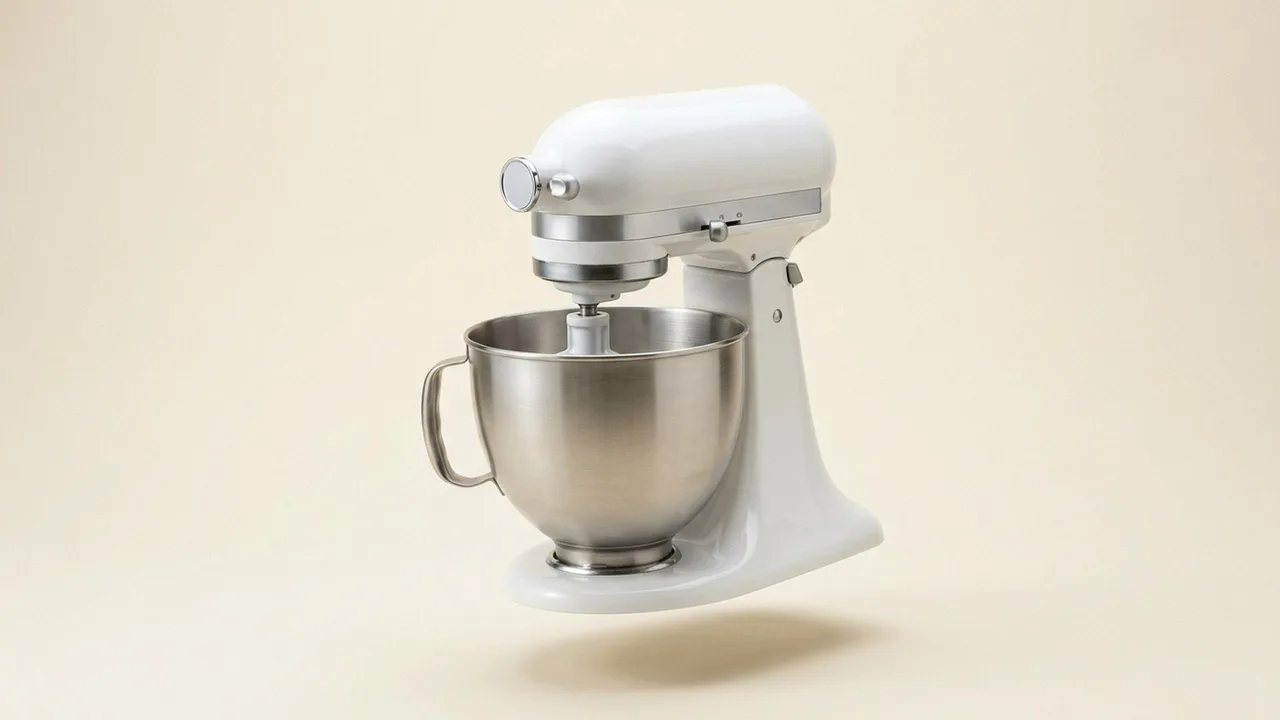
KitchenAid Classic 4.5 Quart Stand Mixer
A 4.5-quart tilt head mixer, a common first mixer.
KitchenAid Artisan, 5 quart
The KitchenAid Artisan KSM150PS steps up to 5 quarts and a wider range of finishes. For many households it is the sweet spot, with enough room to double a cookie recipe and a popular design with a large attachment ecosystem. It costs more than the Classic, and you should decide whether the extra half quart and style are worth it.
KitchenAid Artisan 5 Quart Stand Mixer
A 5-quart tilt head mixer in almond cream.
Cuisinart 5.5 quart
The Cuisinart 5.5-quart stand mixer lists 12 speeds, a stainless steel bowl and a chef's whisk and mixing paddle. It gives you slightly more bowl than the Artisan and more speed settings. The things to check are attachment availability, since the accessory range is smaller than KitchenAid's, and how it handles dense dough, which owner feedback can reveal.
Cuisinart Stand Mixer
A 12 speed mixer with a 5.5-quart stainless steel bowl.
Commercial style 8.4 quart
The 8.4-quart commercial style mixer lists 800 watts, an aluminum die cast construction and a claim that it meets NSF/ANSI 8 2023. It aims at large batches and sturdy daily work. It is bigger, heavier and louder than the others, and the brand is less established, so read warranty details and recurring owner feedback carefully.
8.4 Quart Commercial Stand Mixer
An 8.4-quart, 800-watt mixer with a stainless steel 8-liter bowl.
Who should skip each
Skip the Classic if you bake bread weekly. Skip the Artisan if you rarely bake and want the cheapest path. Skip the Cuisinart if you want a big accessory range. Skip the commercial mixer if you have little counter space or bake only a few times a year.
Comparison at a glance
| Bowl | Style | Best for | |
|---|---|---|---|
| KitchenAid Classic | 4.5 qt | Tilt head | Casual baking |
| KitchenAid Artisan | 5 qt | Tilt head | Keen home baking |
| Cuisinart | 5.5 qt | Stand mixer | Extra bowl and speeds |
| Commercial style | 8.4 qt | Large | Big batches |
The published numbers
KitchenAid lists its Classic series K45SSOB at 4.5 quarts with 10 speeds, a dishwasher-safe bowl and over ten attachments that fit the hub. A retailer page for the KSM150PS lists 5 quarts, 325 watts, 10 speeds, dimensions of about 13.9 x 8.7 x 14.1 inches and a shipping weight of 26.1 pounds. A retailer page for the Cuisinart SM-55 lists 5.5 quarts, 800 watts and 12 speeds with a one year warranty, but that page also says the model is no longer available, so check current stock before planning around it.
Watts are a poor guide
It is tempting to compare 325 watts with 800 watts and conclude the Cuisinart is stronger. Wattage is the electrical input, and stand mixers differ in gearing and in how they transfer torque to the beater. A lower-watt machine with a geared drivetrain can handle stiff dough, while a higher-watt machine can still struggle if the planetary action leaves a gap. Judge mixers by what the manual says about dough capacity and maximum run times, not by watts alone.
Capacity in practice
Bowl capacity in quarts is not the same as dough capacity. A rule many makers apply is that heavy bread dough needs a much smaller flour weight than the bowl size suggests. Check the manual for the maximum flour weight and the recommended speed for kneading. If you bake bread weekly, that figure matters more than the headline quarts.
Tilt-head or bowl-lift
Tilt-head designs are lighter and easier to reach into, which suits cake and cookie batters. Bowl-lift designs hold larger bowls and are steadier with heavy dough, but they cost more and take more storage room. For the models above, the weight and footprint differ enough that you should check where the mixer will live, because a heavy machine that you need to lift each time will end up in a cabinet.
Attachments and the hub
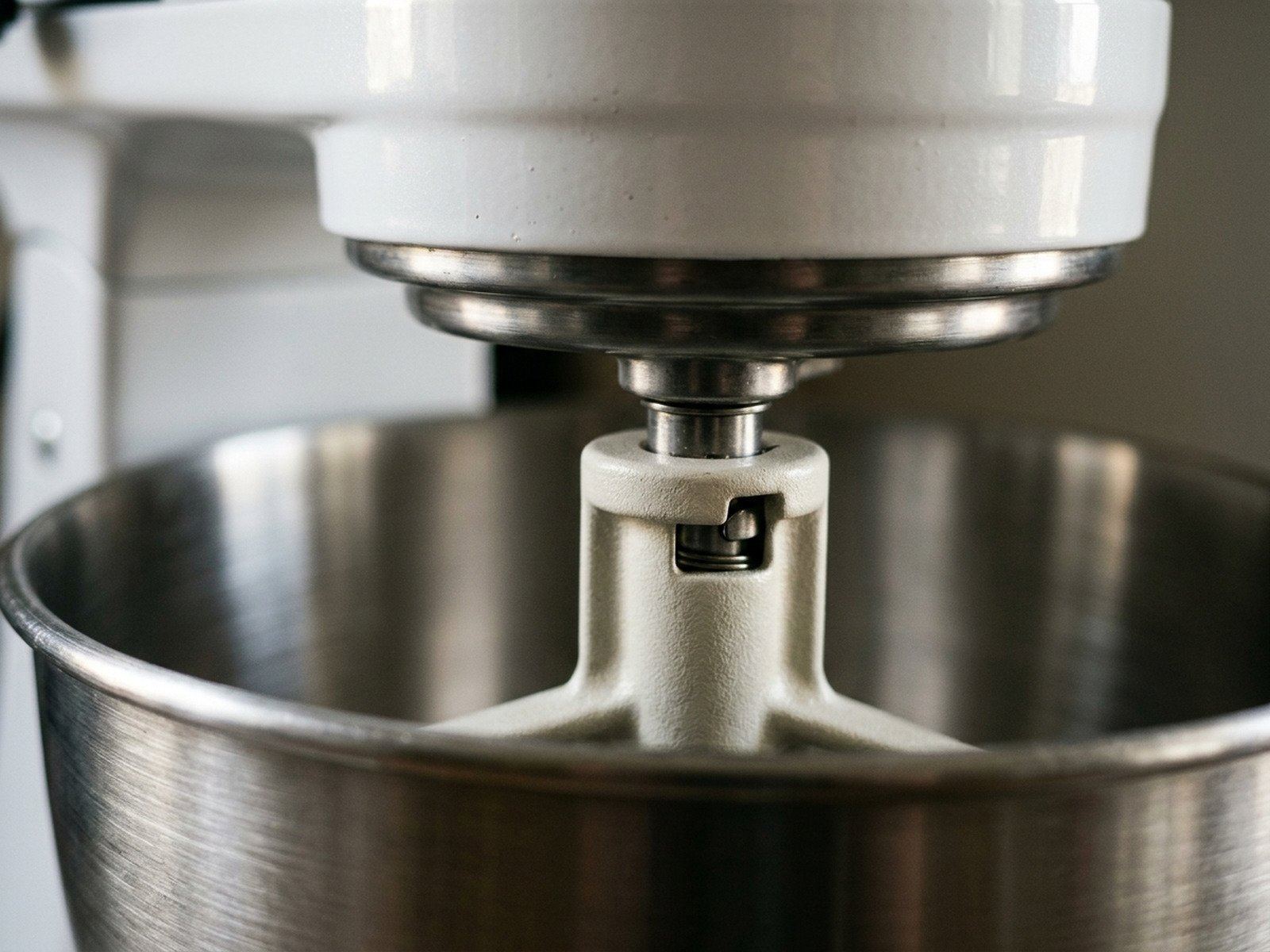
A power hub that takes pasta, grinder or slicer attachments turns a mixer into a platform. That is attractive only if you will buy the extras. Many people never do, and then the hub is irrelevant to them. The attachments are also sold separately, so budget for them if you intend to use them.
Care
Wash the bowl and beaters as the manual allows and wipe the body with a damp cloth. Keep the speed control away from water, and do not leave the machine running unattended on stiff dough.
Two practical tests before you commit
First, the lift test: if you will need to move the mixer from a cabinet to the counter, find out what it weighs, because a figure near 26 pounds is a real consideration for anyone with a bad back or a high shelf. Second, the bowl test: check whether the bowl is dishwasher safe on the listing, since KitchenAid states this for the Classic's bowl, and whether replacement bowls and beaters are sold. A mixer you can repair or restock tends to last longer than one you must replace whole.
Finally, decide what you will actually make. Cakes and cookies suit almost any tilt-head. Regular bread suits a machine with documented dough limits. If you cannot find those limits, assume the machine is not meant for heavy dough.
Before you buy
Measure the space under your cabinets and the weight you can comfortably lift. Check what comes in the box, because some models include a whisk, a paddle and a dough hook, while others do not. If you plan to buy a pasta roller or a meat grinder, check that the hub exists.
For help choosing the type before the model, read How to choose a stand mixer, and for a detailed look at two popular choices, see KitchenAid Classic 4.5-quart Stand vs Cuisinart Stand Mixer.
Skip a stand mixer if
You bake a handful of times a year. A hand mixer and a bowl will serve you well for much less.
Questions people ask
Which stand mixer should a beginner buy?
A 4.5 to 5 quart tilt head mixer such as the KitchenAid Classic or Artisan covers most home baking and is easy to learn on.
Is KitchenAid worth the extra cost?
Many bakers like the brand for its wide attachment range and parts availability. If you only bake occasionally, a simpler mixer may do.
Can a stand mixer knead bread dough?
Yes, but dense dough strains small mixers. Check that your model is suited to the amount of dough you make.
What is NSF certification?
It is a certification for equipment used in food settings. One listing here mentions NSF/ANSI 8 2023, which signals a commercial orientation. Confirm the claim on the product page.
Sources and scope
Reference material is linked for the scope described below. This is not a claim that every statement or current retailer offer has been independently verified.
- KitchenAid Classic K45SSOB (KitchenAid): manufacturer specifications
- KitchenAid KSM150PS (AJ Madison listing): retailer listing
- Cuisinart SM-55 (Abt listing): retailer listing; model marked unavailable
No hands-on testing or systematic reliability study was performed. Confirm current instructions, seller, model and box contents before ordering.