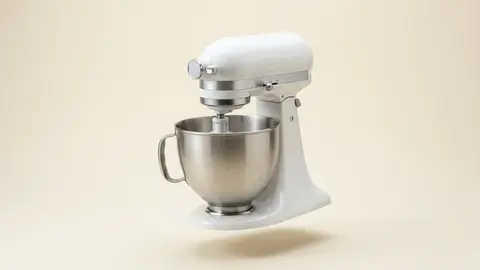
KitchenAid Classic 4.5-quart Stand vs Cuisinart Stand Mixer
A specs-and-sources comparison of the KitchenAid Classic 4.5-quart and the Cuisinart 5.5-quart stand mixer, covering size, speeds, power and who should buy which.
On this page
This is a source-informed comparison, not a hands-on test. These are publisher editorial comparisons, not a systematic owner-feedback study.
Two classic mixers
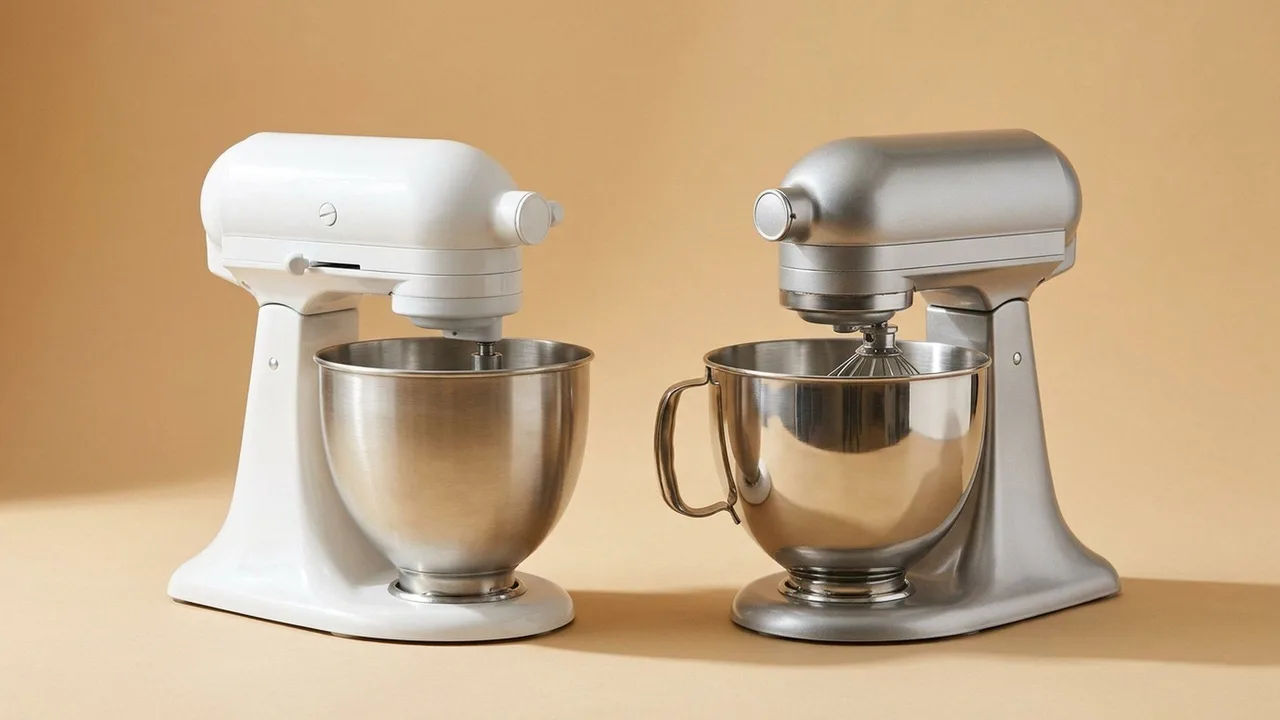
The KitchenAid Classic Series 4.5-quart tilt head mixer is the model many people picture when they imagine a stand mixer. The Cuisinart 5.5-quart stand mixer comes with a larger stainless steel bowl, 12 speeds, a chef's whisk, a mixing paddle, a dough hook and a splatter guard according to its listing.
If you are still learning the category, read how to choose a stand mixer and see the best stand mixers for the wider field.
Bowl size and batches
The Cuisinart's 5.5-quart bowl is noticeably bigger than the 4.5-quart KitchenAid. That extra room helps when you double cookie batches or make bread for a family. The KitchenAid handles a standard single batch comfortably and is a better fit for small kitchens.

Speeds and control
More speed positions can offer smaller steps, but the number does not prove better mixing. Check the manual for which attachments and ingredients are permitted at each speed. Starting too fast can throw dry ingredients, while heavy dough can exceed model-specific limits even at a low setting.
The Cuisinart lists 12 speeds, which gives you finer control from slow stirring to fast whipping. Compare the exact KitchenAid model’s documented speed settings and controls rather than relying on owner-description shorthand. More speeds are nice, not essential.
Attachments and ecosystem
This is where the KitchenAid shines. The attachment hub lets you add pasta makers, grinders, slicers and more, and many accessories are widely available. Cuisinart also sells accessories for its mixers, but the range is narrower. If you dream of making fresh pasta, that tilts the decision.
Build and feel
Owners often describe KitchenAid mixers as sturdy, with many lasting for years. The Cuisinart is a capable machine, though some owners find it lighter in the hand. Heavier mixers tend to stay in place better when kneading, so read recent reviews for each.

Who should buy which
Use a side-by-side worksheet before choosing:
| Decision | KitchenAid Classic | Cuisinart offer |
|---|---|---|
| Bowl | Verify usable capacity and recipe limits | Verify usable capacity and recipe limits |
| Speeds | Confirm exact count and permitted uses | Confirm the listed 12 settings on the exact model |
| Power | Check rating label; do not infer performance | Check rating label; do not infer performance |
| Size and weight | Verify published dimensions | Verify published dimensions |
| Attachments | Check power-hub compatibility | Check model-specific compatibility |
This avoids promising specifications that the current source record does not establish.
Choose the KitchenAid Classic if you bake occasionally, prefer the KitchenAid control and attachment system and may add attachments later. Choose the Cuisinart if you regularly cook larger batches, like the included splatter guard and want a bigger bowl.
KitchenAid Classic 4.5 Quart Stand Mixer
A 4.5-quart tilt head stand mixer from a long established range, with a wide attachment ecosystem.
Cuisinart Stand Mixer
A 5.5-quart stand mixer with 12 speeds and a full set of tools, suited to larger batches.
Be careful with
Kneading very stiff dough in the smaller bowl. Overloading any mixer strains the motor, so follow the dough limit in the manual.
The published figures side by side
KitchenAid lists the Classic K45SSOB at 4.5 quarts and 10 speeds, with a dishwasher-safe bowl and a hub that fits over ten attachments. A retailer page for the Cuisinart SM-55 lists 5.5 quarts, 800 watts, 12 speeds and a one year warranty, though that page marks the model as no longer available, so confirm current stock. KitchenAid's page does not state wattage, so the two cannot be compared on watts, and as noted elsewhere on this site watts are a poor guide anyway.
Capacity
The Cuisinart's extra quart gives it more room for batters and larger batches. The KitchenAid is smaller, which suits small kitchens and typical home recipes. If you bake large batches of cookies or bread, the bigger bowl is a practical gain.
Attachments and ecosystem
The KitchenAid hub is its distinctive feature. Over ten attachments fit it, so you can add pasta rollers or a grinder over time. Check what is available for the Cuisinart, and what each attachment costs, before assuming either is equally flexible.
Speeds and control
The Cuisinart lists 12 speeds against 10 for the KitchenAid. More speeds give finer steps, but they do not guarantee better results. What matters is a gentle stir speed that does not throw flour out of the bowl.
Decision
Choose the KitchenAid if attachments and a smaller footprint appeal and you can verify the current price. Choose the Cuisinart if you want a larger bowl and can find it available with a warranty. Check the return policy.
Availability and support
The Cuisinart page marks the model as no longer available, so check whether replacement bowls and beaters are still sold. KitchenAid attachments are widely listed, but check current prices. A mixer is a long-term purchase, so support after the sale matters.
What to do on arrival
Whichever you choose, run a test batch of cookie dough or batter, check that the head locks, and listen for unusual noise at each speed. Check that the bowl fits firmly and that the beater reaches the bottom of it. Keep the packaging until you are sure, so a return is easy.
The practical answer
For most home bakers, the KitchenAid Classic is the option to shortlist if its documented capacity and attachment system fit. If bowl size is your biggest frustration, the Cuisinart is the better answer. Either way, check the dough capacity in the manual before you buy.
Questions people ask
Which is better for bread dough?
Use each exact manual’s dough type and batch limits. Bowl size, wattage or brand reputation alone does not establish kneading performance.
Which has more attachments?
KitchenAid has a broad attachment catalog, but compatibility is model-specific. Compare the exact hub charts and included tools for both offers.
Which is easier to store?
Measure the current models with the head raised or bowl accessed. This guide does not declare one smaller without verified dimensions.
Is a 4.5-quart bowl big enough?
It can suit many recipes, but the answer depends on the manufacturer’s recipe and dough limits. Nominal quarts do not establish every batch size.
Sources and scope
Reference material is linked for the scope described below. This is not a claim that every statement or current retailer offer has been independently verified.
- KitchenAid Classic K45SSOB (KitchenAid): manufacturer specifications
- Cuisinart SM-55 (Abt listing): retailer listing; model marked unavailable
No hands-on testing or systematic reliability study was performed. Confirm current instructions, seller, model and box contents before ordering.