How to choose a stand mixer
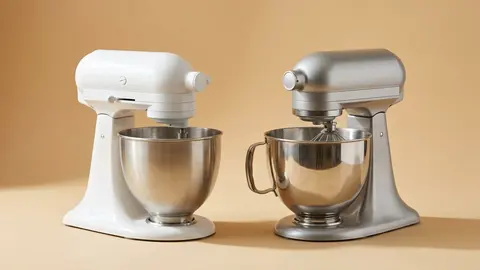
Match a stand mixer to your dough, bowl access and counter space. Compare the listed formats without confusing bowl volume with kneading capacity.

On this page
- Write the recipe before the bowl size
- A documented tilt-head example
- Tilt-head and bowl-lift are access decisions
- Check the complete tool set
- Capacity claims need their conditions
- Plan the space where it will stay
- Published figures
- How to use them
- Attachments
- Decide on the three things that matter
- Test the mixer when it arrives
- Cleaning and support finish the choice
Start with the recipe you bake regularly, not the largest bowl in a product title. A useful stand mixer must handle the approved workload, let you reach the bowl and fit where you will actually use it.
Write the recipe before the bowl size
Record the usual ingredients and quantity, including flour when dough is involved. Then find the maker's instructions for that recipe type, attachment, speed and working limits.
Nominal bowl volume does not establish a permitted dough quantity. A stiff mixture and a liquid mixture are not interchangeable workloads. Do not infer commercial suitability or continuous operation from the appearance of a large appliance.
A documented tilt-head example
The linked KSM150PS family source may describe a particular color suffix. Confirm the exact KSM150PSER or other offered variant, included bowl and tools before treating a shared family page as the complete retailer bundle.
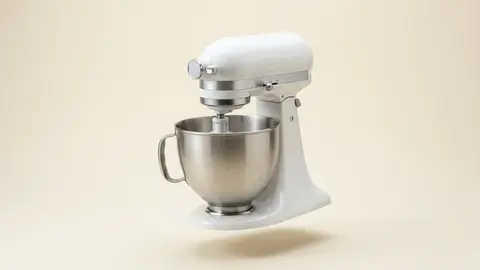
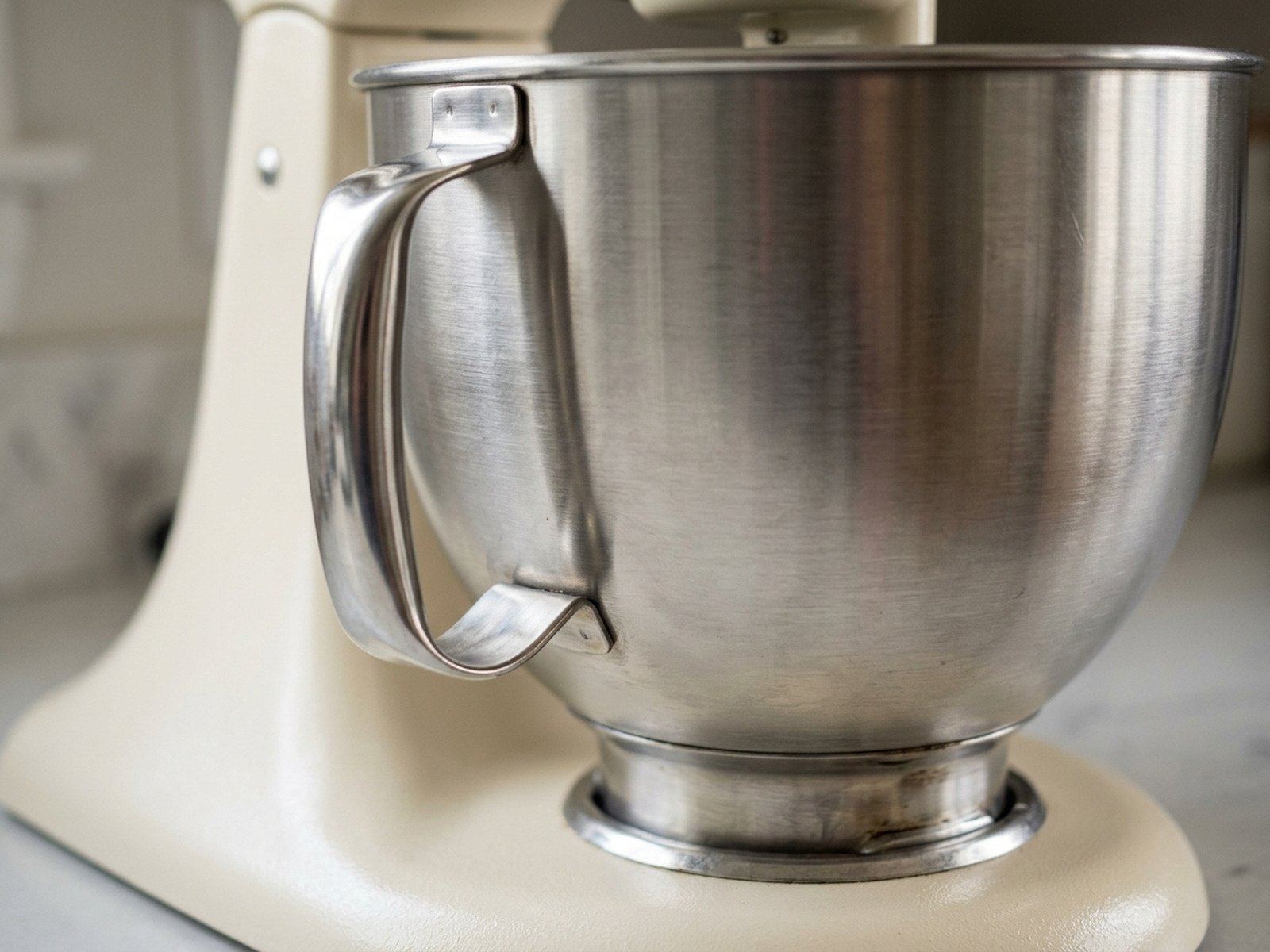
KitchenAid's KSM150PS Artisan manufacturer page describes a 5-quart stainless steel bowl, a tilt-head design and ten speeds. The maker lists a flat beater, dough hook, wire whip and pouring shield with the described model.
KitchenAid Artisan 5 Quart Stand Mixer
An Artisan KSM150PS example with a manufacturer-documented 5-quart tilt-head format. Verify the exact color, regional model and retailer bundle before ordering.
The source is for a particular color variant in the KSM150PS family. It does not establish that every retailer offer, regional model or accessory package is identical. Check the exact listing and matching instructions.
Tilt-head and bowl-lift are access decisions
A tilt-head arrangement needs room above the machine when you raise the head. A bowl-lift arrangement has a different attachment and removal routine. Neither label proves that a machine is stronger, quieter or better for every recipe.
Imagine adding ingredients, removing the bowl and changing tools beneath your actual cabinet. A mixer that fits while parked can still be awkward to operate.
Check the complete tool set
| Question | Why it matters |
|---|---|
| Which beater, hook and whisk are included? | The tool must match the task and machine. |
| Which speed is approved for the recipe? | More speed choices are not permission to ignore instructions. |
| Are the tools individually dishwasher-approved? | A care rule for one finish may not apply to another. |
| Which optional attachments are compatible? | Similar brand names do not establish fit. |
| Where can approved replacement parts be obtained? | A missing tool can make an otherwise usable machine inconvenient. |
A pouring shield is useful only if its loading and removal routine suits you. It does not replace sensible ingredient loading or the maker's operating directions.
Capacity claims need their conditions
Some makers describe a capacity in cookies or batches. Read the recipe size, attachment and other conditions behind that claim rather than translating it into a universal quantity.
For your purchase, the important question is whether your regular mixture is within the documented limits. If the relevant manual does not settle that question, ask the maker before ordering.
Plan the space where it will stay
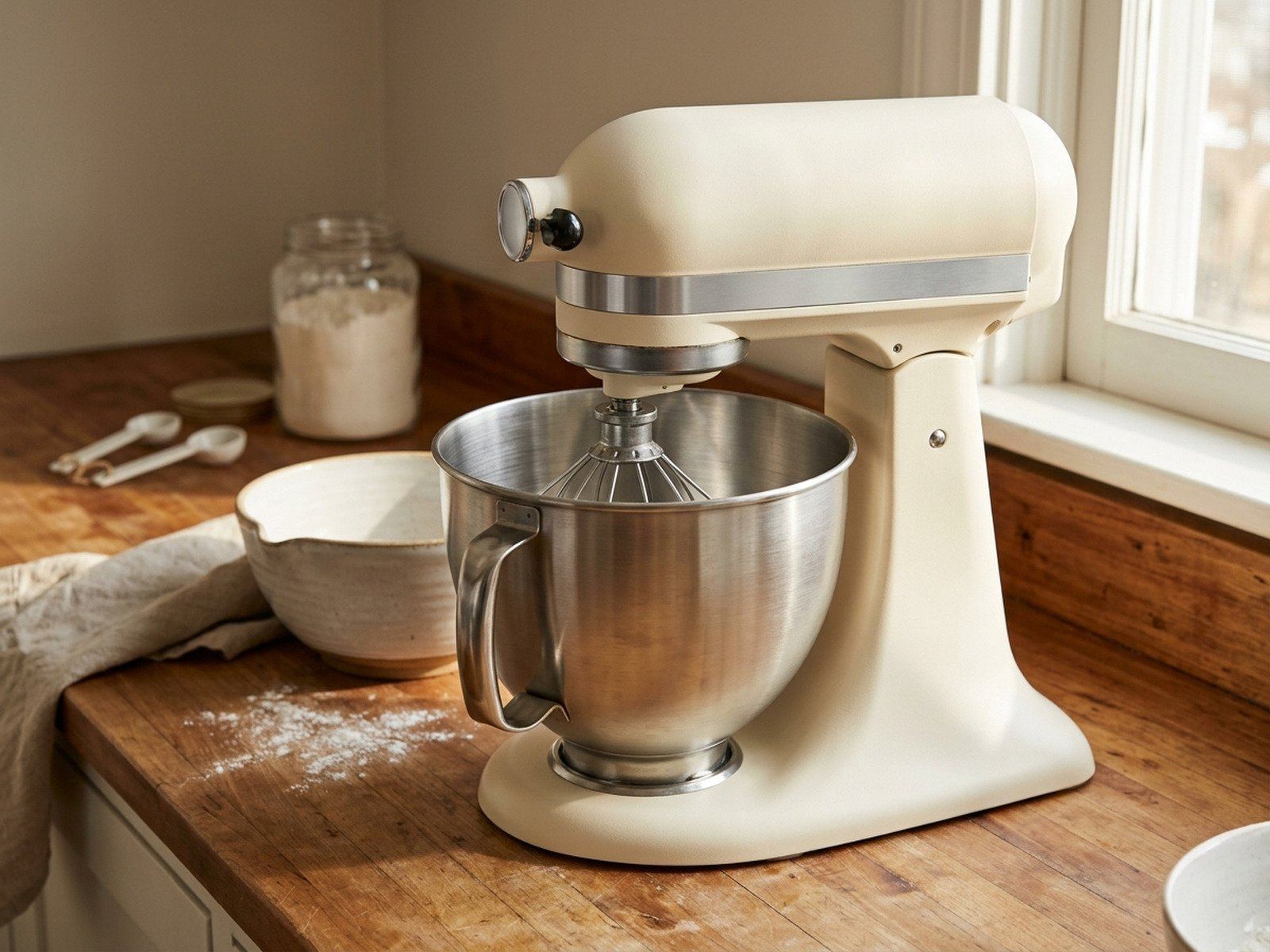
Include the ingredient bowl, removed attachment and route to the sink in the working area. If the mixer will be lifted into storage after every use, check its actual weight and decide whether that is a routine you will maintain.
Allow the specified ventilation and safe working clearances. Match electrical requirements to your location. Do not buy a regional version solely because its online price looks attractive.
Published figures
KitchenAid lists the Classic K45SSOB at 4.5 quarts with 10 speeds, a dishwasher-safe bowl and over ten attachments. A retailer page for the KSM150PS lists 5 quarts, 325 watts, 10 speeds and a shipping weight of 26.1 pounds. A retailer page for the Cuisinart SM-55 lists 5.5 quarts, 800 watts, 12 speeds and a one year warranty, though it marks the model as no longer available.
How to use them
Do not compare watts across brands as a measure of strength. Check the manual for maximum dough weight and run times. Consider weight and where the mixer will be stored, since a 26 pound machine is not one you will want to lift each day.
Attachments
If you will use a pasta roller or grinder, check cost and fit before you commit.
Decide on the three things that matter
Choose the bowl size that fits your usual batch, the weight you can store and lift, and the attachments you will really buy. Everything else, including color and the number of speeds, is secondary. Read the manual for dough limits and run times, and avoid overloading the motor with stiff dough. Check the warranty, the price of spare bowls and beaters and the return policy. A mixer that fits your kitchen and your recipes will be used for years.
Test the mixer when it arrives
Run it empty at each speed to hear the motor, check that the head locks, and confirm the bowl sits firmly. Mix a small test batch of batter before the first big bake, and watch whether the beater reaches the bottom of the bowl. If the beater scrapes or leaves a pocket of flour, adjust it as the manual describes, or return the machine while you still can.
Cleaning and support finish the choice
Disconnect power and follow the safe removal instructions before cleaning. Use the care directions for each component, including finish-specific restrictions. Do not immerse a powered base or force a part that is not meant to be removed.
Finally, check the warranty, current seller, return policy and replacement parts. We have not measured kneading performance, noise or longevity. This guide is a purchase checklist, not a test ranking.
If smoothies are the real task, use our blender guide. For cooking rather than mixing, read how to choose an air fryer. The best starting point is the job you do each week.
Questions people ask
Does bowl volume equal dough capacity?
No. Use the maker's recipe, attachment, speed and workload limits for the exact model.
Can a tilt-head mixer sit beneath a cabinet?
Only if you have the required operating room, including head movement and safe access to the bowl.
Are optional attachments always included?
No. Check the exact offer and the maker's compatibility information.
Sources and scope
Reference material is linked for the scope described below. This is not a claim that every statement or current retailer offer has been independently verified.
- KitchenAid Classic K45SSOB (KitchenAid): manufacturer specifications
- KitchenAid KSM150PS (AJ Madison listing): retailer listing
- Cuisinart SM-55 (Abt listing): retailer listing; model marked unavailable
No hands-on testing or systematic reliability study was performed. Confirm current instructions, seller, model and box contents before ordering.